


MAINTENANCE GUIDE & TIPS
Untangling a chain without damaging it: easy methods
A necklace entangled at the bottom of a pencil case, a pendant stuck in a micro-knot, a chain that refuses to slip…
Don’t panic: with the right surface, a little patience and precise gestures, you can untie most chains
without pulling or scratching. This guide brings together our favorite gentle methods — tested in the workshop —
to quickly detangle, then prevent knots in the future. Our Ylume jewelry is made of
18 K gold plated (3 μ), nickel-free, lead-free, cadmium-free, matte champagne finish: in other words,
we want them to remain beautiful… and free!
and rinse/wipe afterwards to regain shine.
Why do chains tie knots?
Common causes
- Loose open chain (clasp not closed).
- Movement + friction in a bag or pencil case.
- Strings of different lengths stored together.
- Bulky pendants that hold the fine links.
Sensitive areas
- Very fine links (fine cable chains).
- Jump rings near the clasp.
- Reliefs (hammered, tassels) that cling.
The key to untying without breakage: reduce friction (lubricate), stabilize the chain (anti-slip surface),
and act by gently twisting around the knot rather than pulling on the ends.
The ideal “detangling” kit (everything you already have at home)
| Tool | Role | Home Alternative |
|---|---|---|
| Anti-slip or microfiber | Stabilizes the chain, prevents it from slipping | Clear terry towel |
| Fine pins | Gently open the knot, push/pry | Smooth toothpicks (splinter-free) |
| Neutral oil (1 drop) | Lubricates the links (slippage) | Clear olive oil / baby oil |
| Warm water + mild | Final washing or aqueous | Mild washing-up liquid |
| Tweezers with round | Sear without pinching hard (optional) | Fingers + soft tissue for grip |
| Handkerchief / soft | Final wipe (matte champagne) | Ylume cotton pouch |
10 Easy Methods to Detangle Without Damaging
1) The “drop of oil” method (the gentlest)
- Lay the chain flat on a clear microfiber.
- Place 1 drop of neutral oil on the knot (not elsewhere).
- With two pins, gently roll the knot between the ends to soften it.
- Insert the tip of a pin into the center of the knot, pry to enlarge the loop.
- Then pull on a single strand, very lightly, to release the loop.
- Rinse with warm water + mild soap, wipe with a cloth.
Perfect for thin chains with flat pendants (medals).
2) Warm soap + anti-slip mat
- Place a few drops of warm soapy water on the knot.
- Stabilize the chain with a finger covered with a tissue.
- Rotate the knot between two pins, then gently pull the loops apart.
- Rinse and dry.
3) Double “screwdriver” pin
- Stick the tips of two pins into the loop of the knot (very few).
- Make an opposite movement (such as opening a broken ring) to enlarge.
- Release the outgoing strand, then the incoming strand.
4) Smoothed toothpicks (without risk of scratching)
For those who dread the needle: two smooth toothpicks allow you to push/spread without metal.
5) Talcum powder? No, prefer oil
Talcum powder can infiltrate and stick to micro-reliefs; then a longer cleaning will be required. Prefer a drop of oil
or a mild soap that rinses off.
6) “Loop and counter-loop” method
- Identify the two master strands that go in/out of the node.
- Form a small loop on the outgoing strand, push towards the knot to loosen it.
- Grab the loop created with the pin and remove it.
7) With pendant: “block + release”
- Block the pendant flat under one finger (handkerchief interposed).
- Work the knot further away without moving the pendant.
- Once the knot is loosened, slide the pendant through the enlarged buckle.
8) Micro-knot near the clasp
- Look for the junction ring: it is often the one that “catches”.
- Lubricate the ring and the first link precisely.
- Use the double pin to open the buckle, pull the link outwards.
9) Multiple chain (two tangled chains)
- Close both clasps.
- Visually separate the colors/reliefs, lay them in a “Y” shape.
- Attack the first knot with the thinnest chain (it goes through the largest one).
10) The “bath” method (last resort)
- In a dish, warm water + a few drops of mild soap.
- Soak for 5–10 min (never with leather/pearl/silk).
- Take out, lay flat and untie with pins. Rinse, dry immediately.
use rusty or chipped pins.
Special cases: fine chains, hammered chains, tassels, stones
Ultra-thin chains
- Prefer oil over soap.
- Never “pull to see”: always enlarge the loop first.
Hammered / Tassels
- Work flat, tassel immobilized under a handkerchief.
- Avoid the tassel rotating in the knot (anchor effect).
Gemstone Pendant
- No prolonged lukewarm bath if glued assembly.
- Wipe immediately around the setting.
After detangling: rinse, dry, restore its shape
- If you have used oil : a pass of warm water + mild soap, then rinse.
- Place the chain on a towel, dab (do not rub).
- Take the chain between your thumb and forefinger, slide it gently to realign the links.
- Store it closed in a cotton bag (or directly worn).
Ylume gilding (18 k gold plated – 3 μ, matte champagne finish,
nickel-free, lead-free, cadmium-free) appreciate gentleness: no abrasives, no aggressive products.
Preventing knots: 12 reflexes that change everything
Everyday life
- Always close the chain before putting it down.
- Remove your collars before sport, nap, swimming.
- Avoid highly textured collars with long chains (60 cm).
Storage
- One cotton pouch per piece (closed chain).
- If together: clear individual pouches , each for a chain.
- Microfiber “burrito” roll for 2–3 separate chains.
Travelling
- Straw method (45 cm) and film (long chains).
- Pencil case with chain flap + individual pouches.
- Anti-humidity bag in the kit.
See also our guide: Travelling with your jewellery: pencil case, storage, anti-knots.
Decision tree (express): which method to choose?
| Location | Action | Plan B |
|---|---|---|
| Micro-knot on thin | 1 drop oil + double pin | Smooth toothpicks + warm soap |
| Knot near the clasp | Lubricate the ring + “screwdriver” | Remove the pendant and then resume |
| Two chains mixed | Close the two clasps, treat the finer one first | Fast lukewarm bath, flat work |
| Bulky pendant that blocks | Immobilize the pendant, enlarge the buckle | Slide the pendant through the enlarged loop |
Ylume chains & medals: designed to last
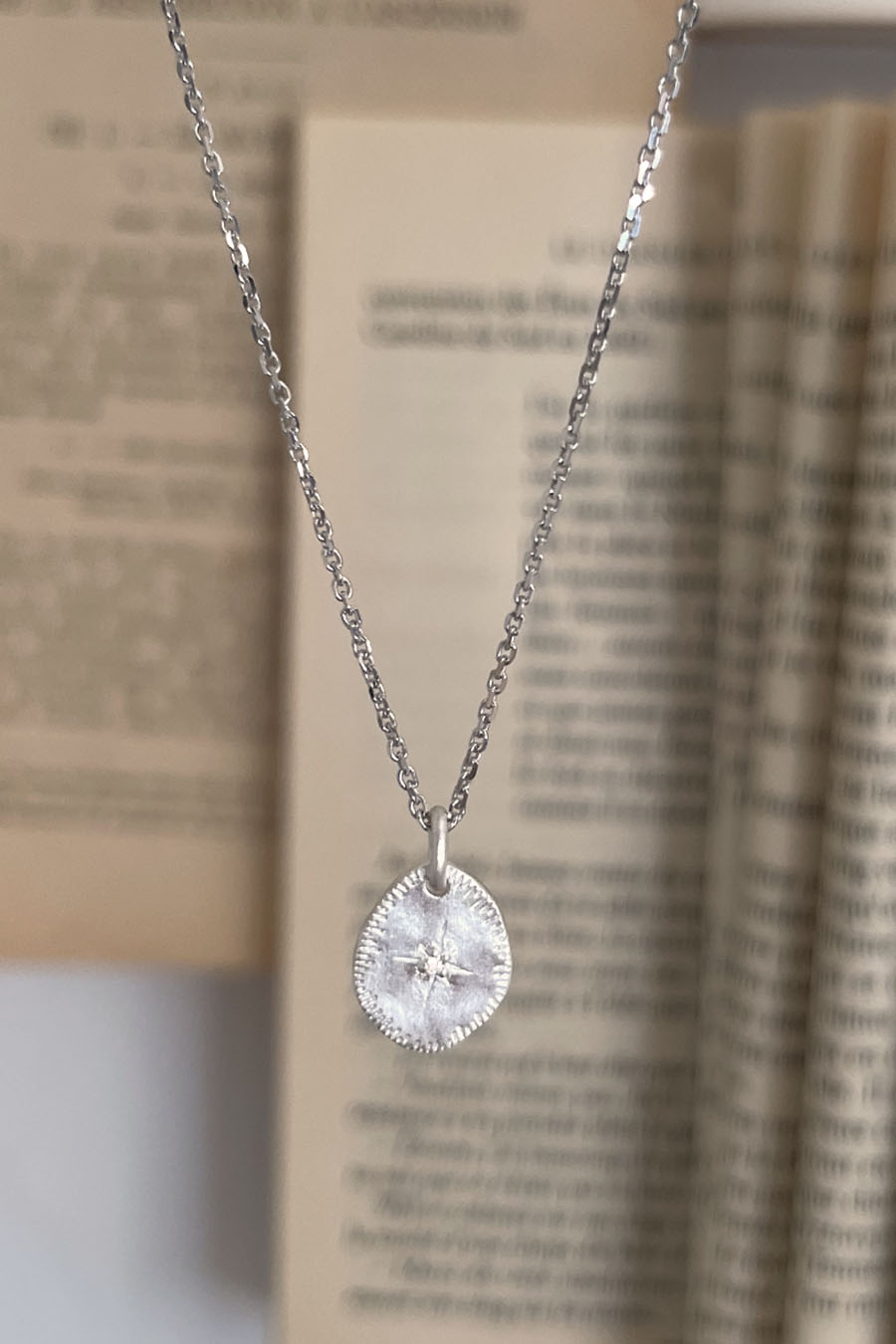
Our chains and medallions are designed in Aix-en-Provence and finished with 18 k gold plated (3 μ) gilding,
a matte champagne shade, nickel-free, lead-free, cadmium-free, to combine softness on the skin
and daily wear. Explore:
medallion necklaces 45/60 cm,
Creoles,
rushes.
FAQ — Untangling a chain without damaging it
Oil or soap: what to choose?
The oil is ideal for tight knots and fine chains; It lubricates and allows for a smooth glide.
Warm soap is suitable if you prefer a quick rinse. In any case, rinse/wipe afterwards.
How long does it take to untangle a knot?
For the majority of cases, 2 to 10 minutes if you are working flat, lubricate and use two tips to enlarge the curl.
Can I use metal pliers?
Yes, but with round and smooth tips, very gently. Avoid notched clips that mark the gilding.
Smooth toothpicks are a safe alternative.
I have beaded / leather jewelry, can I put it in a warm bath?
No. Avoid prolonged baths for these materials. Prefer punctual oil on the knot and wipe immediately.
How can we prevent it from happening again?
Always close the chain, store it alone (pouch), use straw/film when travelling, and choose a flap chain case.
See our Prevention section.
Free chains, simple gestures
Need a replacement chain or want to try a 60 cm length to layer without knots?
Browse through our medallions & chains
and create an easy-going 45 cm + 60 cm duo — in 18k gold (3 μ) plated,
matte champagne finish, nickel-free, lead-free, cadmium-free.